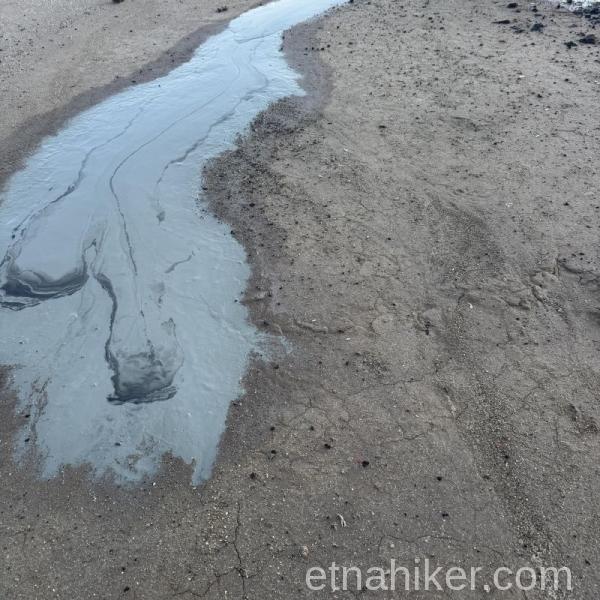
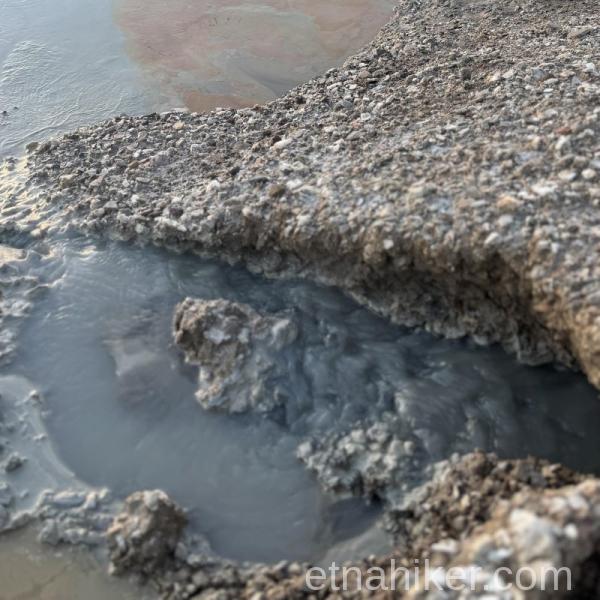
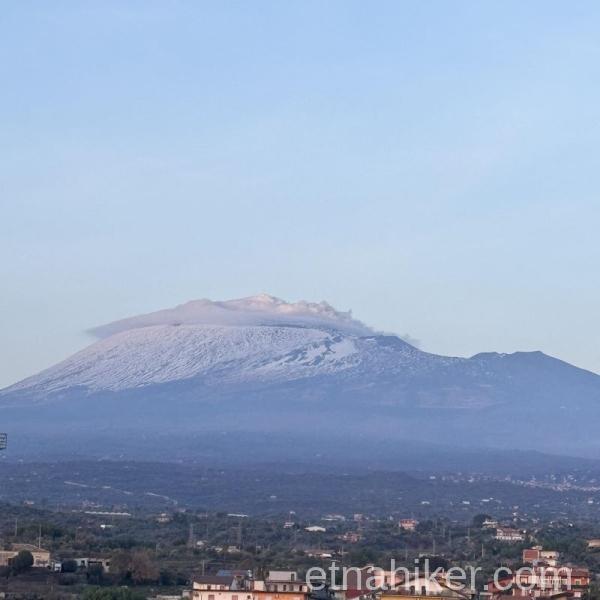
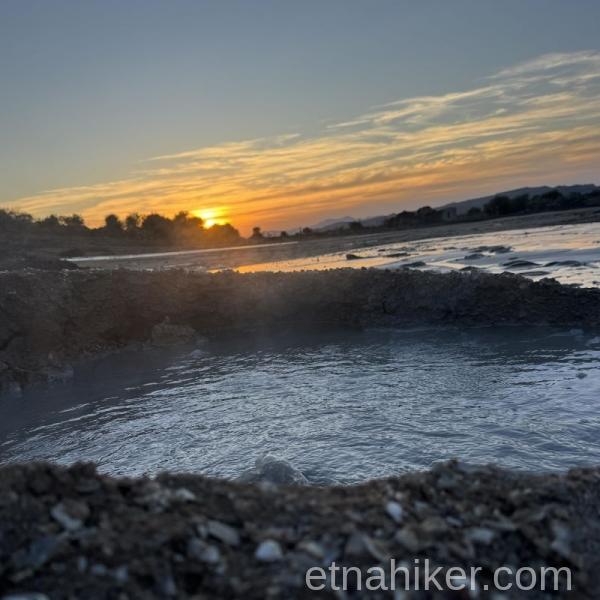
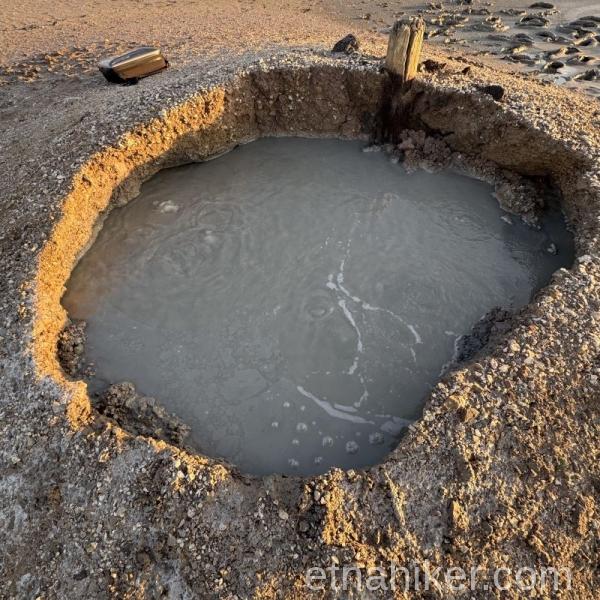
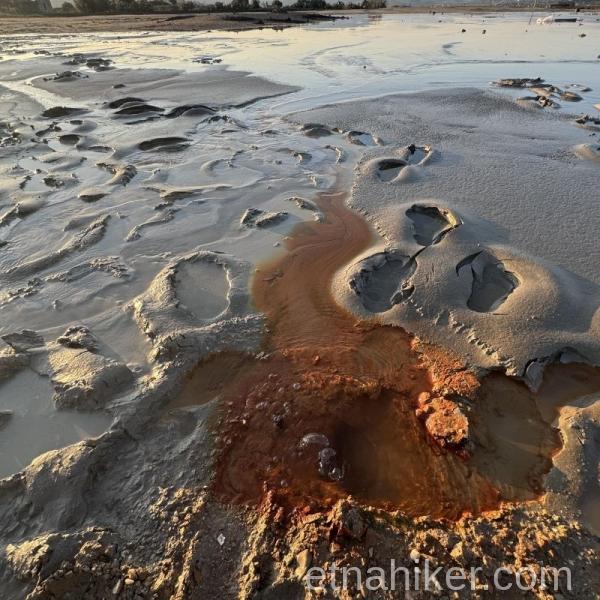
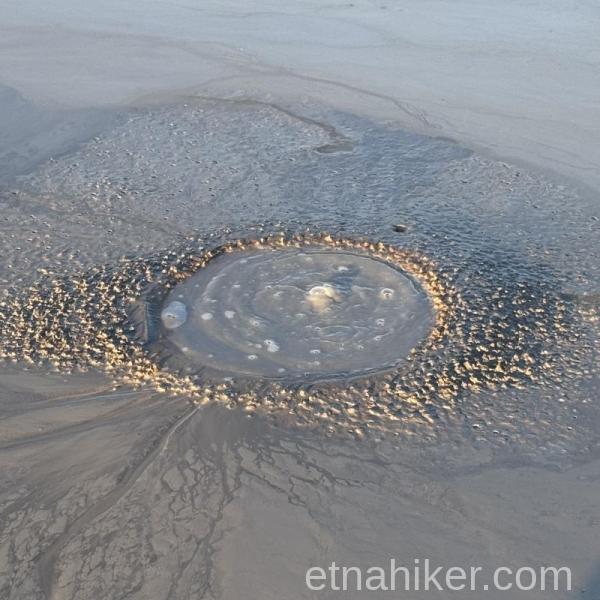
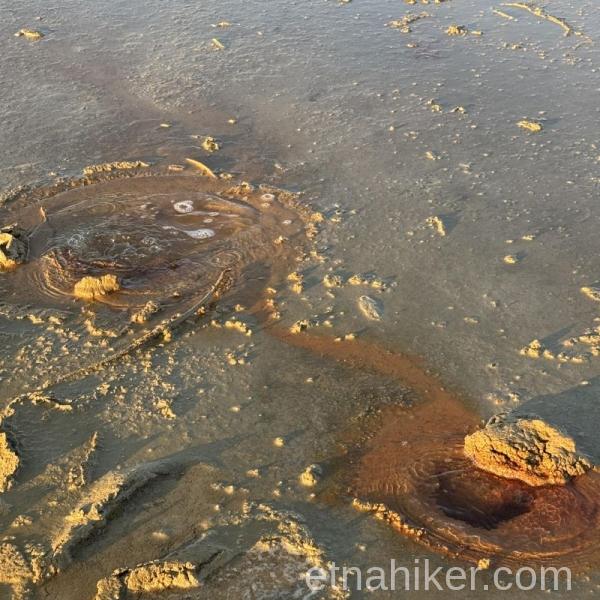
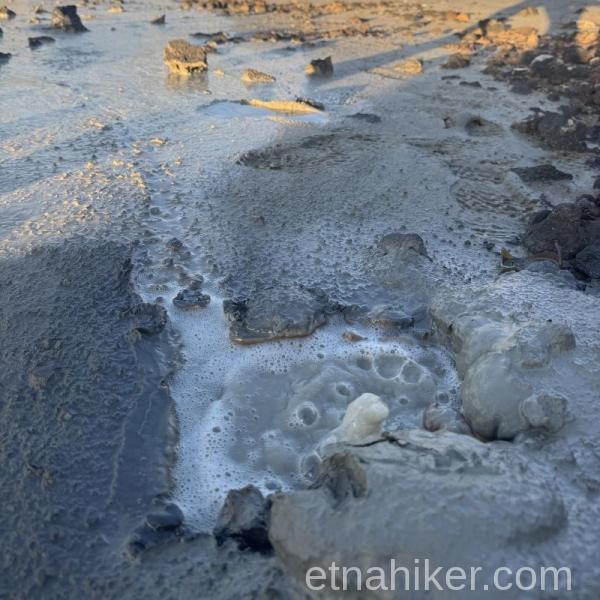
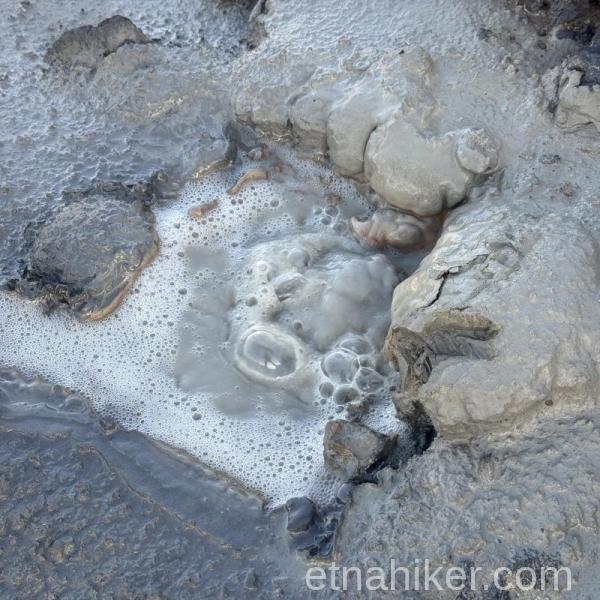
The Salinelle of Paternò are a unique geological site in Europe. They are extremely fascinating as they are linked to Mount Etna’s internal activity and serve as a striking expression of the Etnean area’s dynamism. They can indicate whether the volcano is “brewing” something or not—essentially signaling if something is simmering beneath the surface. Above all, they represent an enchanting natural spectacle and a growing tourist attraction.
This is indeed a form of volcanic activity, consisting of gas emissions that mix with underground water and clay, forming bubbling pools that can occasionally become more violent.
These consist of brackish, muddy waters with continuous gas bubbling at the center. This gas is largely carbon dioxide of very deep origin. It is a magmatic gas coming from a deep reservoir beneath Mount Etna, located almost at the mantle level. As this carbon dioxide rises toward the surface, it encounters a shallower organic gas: methane. The interaction between these two gases produces this remarkable activity, resulting in the emission of highly saline waters.
The salinity of these waters is much higher than that of seawater. However, these are not “ancient sea” waters; they have a dual origin, forming both from the condensation of deep, salt-rich magmatic fluids known as “brine” and from waters that extract salt from the clays of the local substrate. The emitted clay is a bluish “marsa” clay, formed approximately 20 million years ago, which is mobilized and brought to the surface.
The water is warm, with an average temperature of about 40°C. This heat originates from deep within the volcano; fluctuations in this temperature generally correspond to an increase in eruptive activity, as recorded, for example, during the 2020–2022 paroxysmal phase. These variations also signal that significant gas pressure has accumulated deep within the volcano and that new magma will likely be erupted in a short time. If we were to make a prediction for the future—a precursor that must always be taken with a grain of salt—it suggests that when an increase in activity is recorded at the Salinelle, it is likely that an increase in the volcano’s activity could occur in the coming months.
Historically, according to 19th-century literature, various scholars such as Gemellaro, Ponte, and Silvestri visited, studied, and monitored this site, reporting temperature values of 50 degrees even then. This suggests that the deep reservoir of the Salinelle is located approximately 1 km within the crust and, according to some estimates, reaches a temperature of around 120–140°C. The Salinelle also represent a significant geothermal resource, and one could even imagine land exploitation for energy purposes. However, the site is preserved and protected; the uniqueness of the Salinelle lies in the fact that the volcano itself provides the “propellant”—the gas.
Other mud volcanoes around the world are fueled exclusively by methane gas and are not of volcanic origin; therefore, they cease to function once these hydrocarbon gas pockets are exhausted.
Here, as long as Mount Etna exists, the eruptive activity of our Salinelle will persist.
Photos of the Salinelle