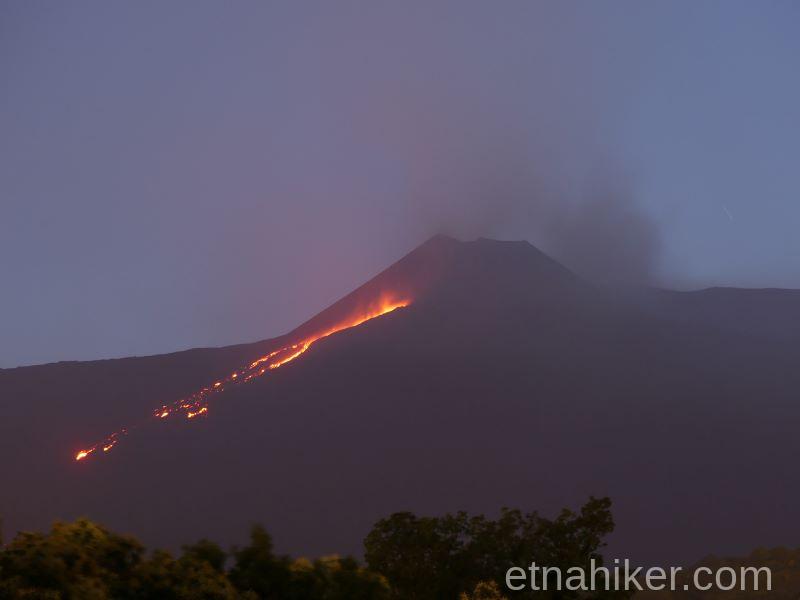
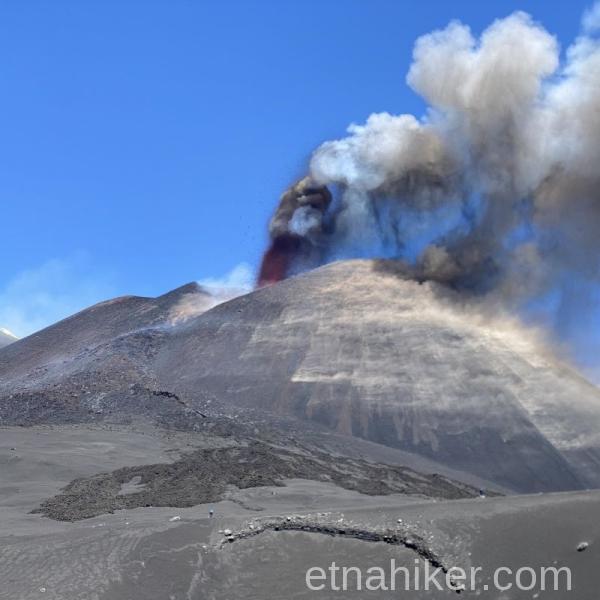
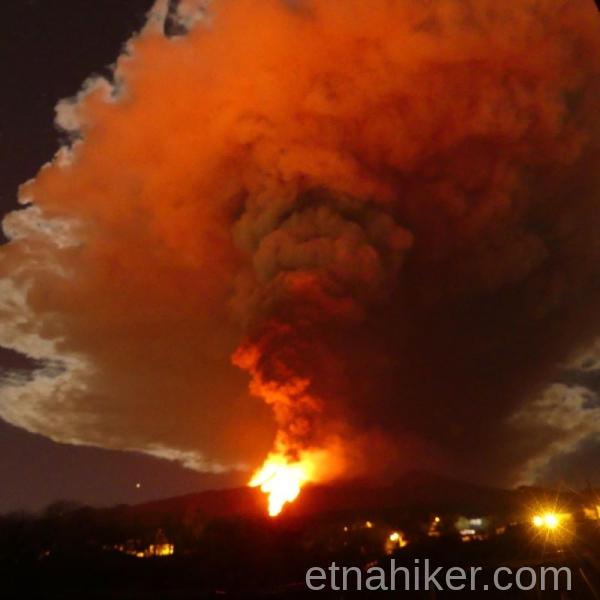
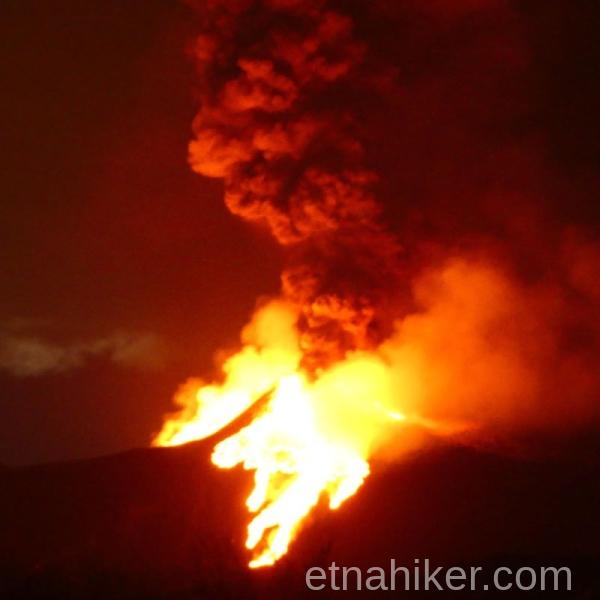
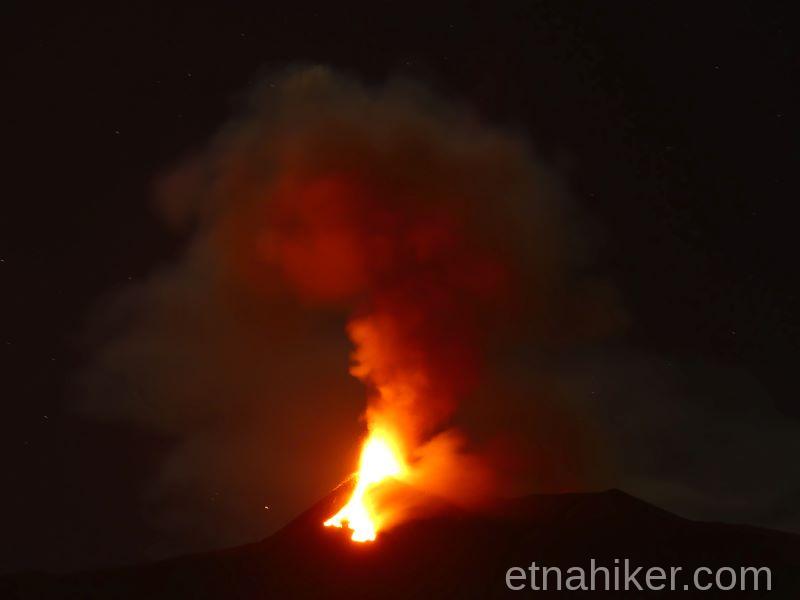
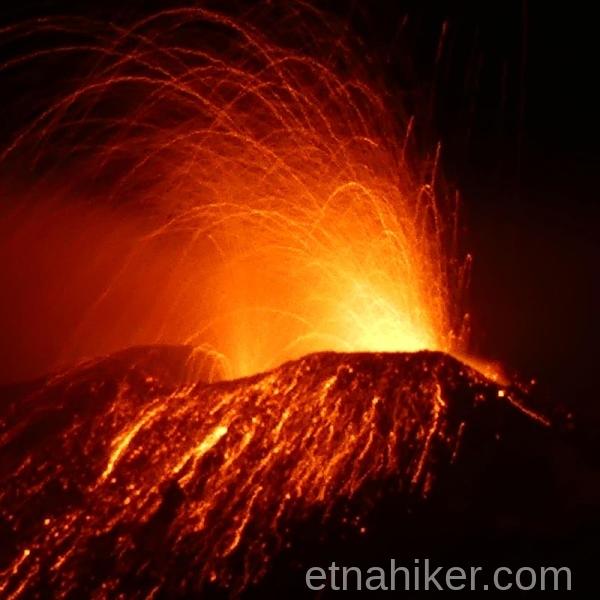
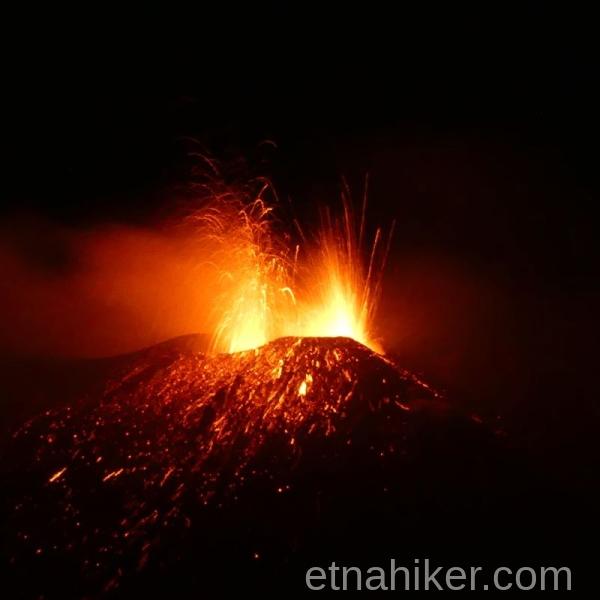
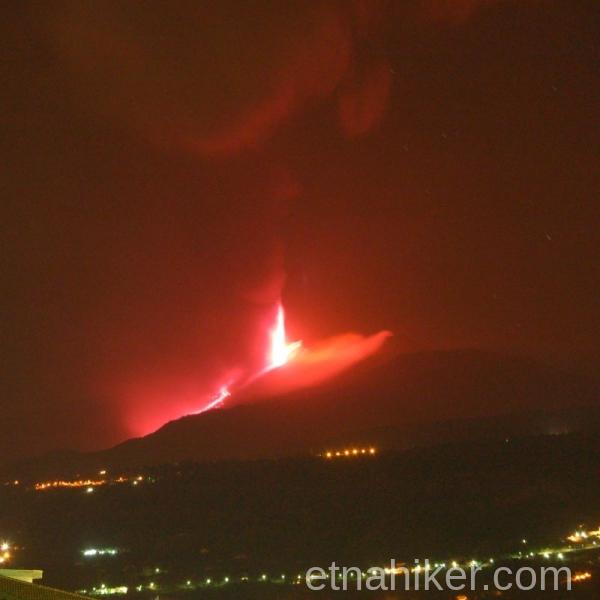
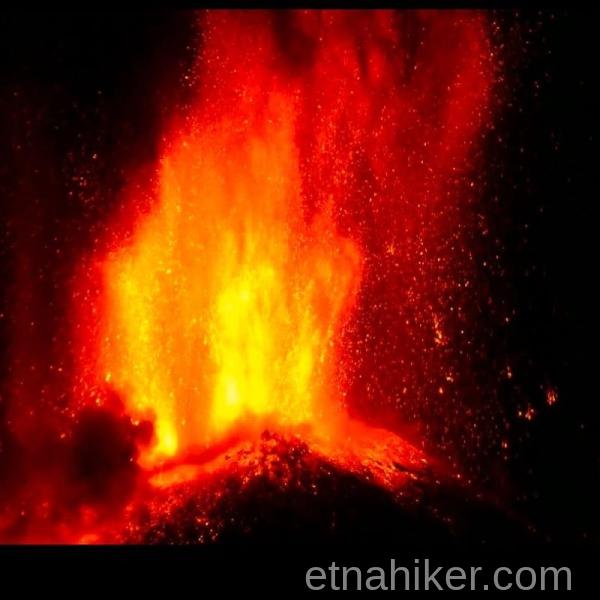
Although long considered a “gentle giant” by the locals due to its primarily effusive eruptions, Mount Etna has seen an increase in explosive “Paroxysm” events from its summit craters in recent decades. Alternatively, perhaps today’s easier documentation of such events simply makes the constant dynamism of this giant more visible to everyone.
When ongoing volcanic activity becomes sudden and particularly violent—specifically when vast quantities of volcanic products are released with extreme power over a relatively short period—it is referred to as a Volcanic Paroxysm.
Typically, this phenomenon represents the final, extreme stage of an activity that began moderately, though it can also manifest with this intensity from the very start.
Paroxysms on Mount Etna are characterized by intense explosive activity ranging from violent Strombolian explosions to spectacular lava fountains. This diversity in eruptive behavior is linked to the different magma ascent mechanisms within the volcanic conduits that carry it toward the surface. These events can last from tens of minutes to several hours or days, generally producing high eruptive columns sometimes exceeding 10 km above sea level and significant ash cloud emissions that can disperse hundreds of kilometers from the volcano. These volcanic products cause considerable disruption to local populations as well as air, road, and rail traffic. These events appear to be linked to transient magmatic intrusions that fuel them, manifesting their full power through the phenomena described above.
It is also important to note that each individual event provides increasingly updated data for a better understanding of volcanic activity. Volcanic eruptions are classified using an “energy index” known as the VEI (Volcanic Explosivity Index), which is determined by the volume of products emitted, measured in cubic meters. This index ranges from 0 to 8. To illustrate how catastrophic a volcano’s manifestations can be, it is noteworthy that Mount Etna’s most massive historical eruption in 1669 was classified as a VEI 4. At the moment, Mount Etna is certainly not a cause for alarm.
Sicily is home to several active volcanoes, but the two most notable for their nearly continuous eruptive activity, at least in recent times, are undoubtedly Mount Etna and Stromboli. Both are open-conduit volcanoes; however, they display different chemical properties in their events and erupted products. This difference is primarily due to the diverse magmas that feed their respective activities, though they converge in similar eruptive dynamics linked to the same magma ascent mechanisms within the conduit.
The paroxysmal sequences and episodes produced by Mount Etna are classified as “fluid magma” paroxysms. These should not be confused with the activity observed on Stromboli, which falls under the “viscous magma” category, as the events recorded on Stromboli have a different behavioral genesis than those of Etna. It is important to remember that Stromboli and Mount Etna in Sicily are defined as open-conduit volcanoes, unlike other Sicilian volcanoes such as Vulcano Island, which is classified as a closed-conduit volcano.
Paroxysmal sequences on Mount Etna generally represent an entire “eruptive period.” For this reason, an alert system called ETNAS was established to improve risk mitigation for summit activities led by Alpine and Volcanological Guides. Monitoring is managed by the INGV (National Institute of Geophysics and Volcanology), which conducts continuous surveillance of the volcano. Using specialized instrumentation, they can anticipate and communicate such events to personnel on the volcano in time to facilitate the evacuation of the summit area, which involves leaving the zone bounded by the yellow line as indicated on the map.
It can undoubtedly be confirmed that Mount Etna is well-monitored by experts and remains in a good state of health, even if it is currently “feeling a bit under the weather” on its flank—but we will discuss this in more detail later.
Further Reading
Mount Etna Paroxysms Video